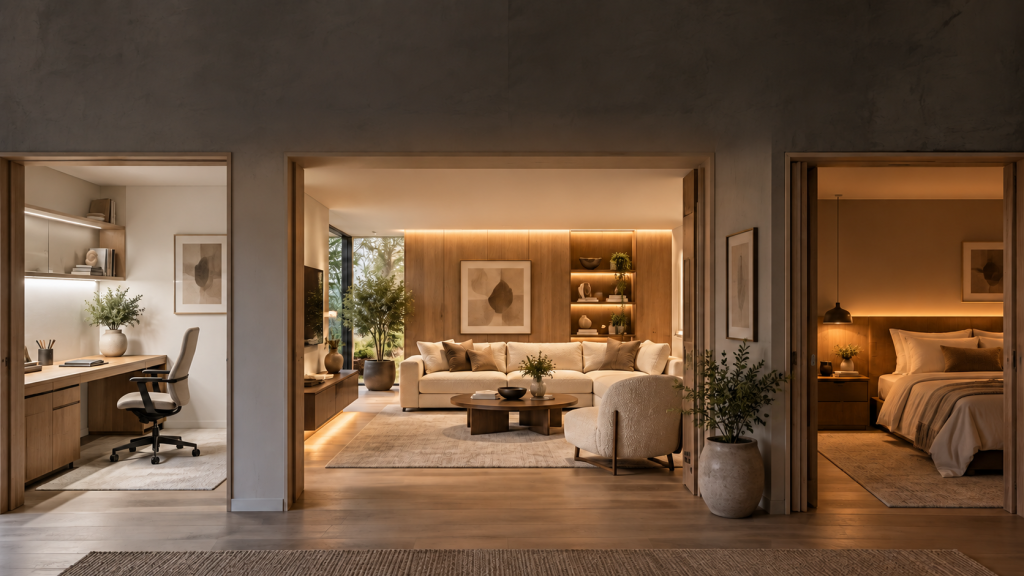
The Light We See Is Also the Light We Feel
We experience it every morning. We flip on the kitchen light. Its brilliant illumination not only helps to wake us up, but it’s part of our morning ritual: make the coffee, some toast maybe, and start our day.
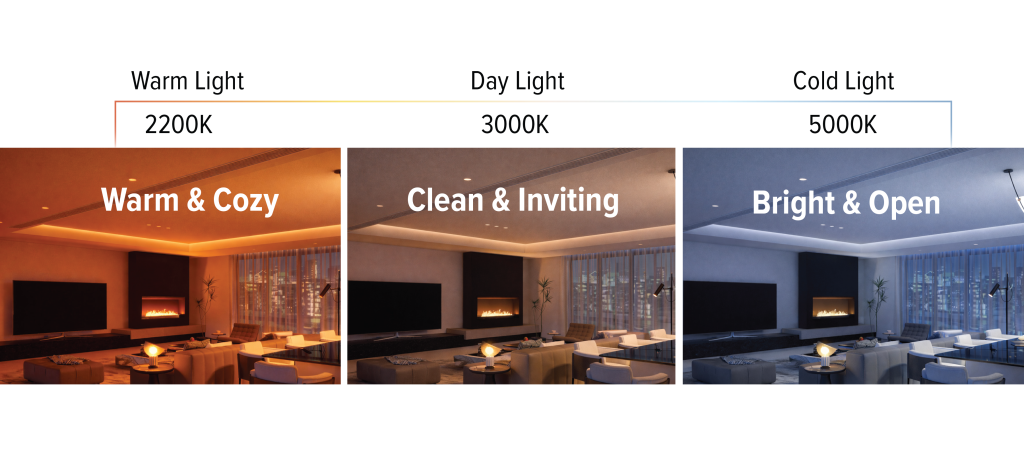
Your office or workplace may be similarly illuminated. 3,000K to 4,000K: you feel productive, your attention is more focused, your eye is on the ball. You come home and it’s time to lower those kelvins, maybe to 2700K, and that same kitchen starts asking for dinner, wine, and “how was your day?”. Warm it further and dim it toward 2200K, and your environment whispers: “The day is over.”
Since we retreated to caves for not only environmental protection, but also as a sun-block – light precedes wakefulness. We now call it ‘circadian rhythm’, and light plays a huge part in it.
Our response is partly biological, partly psychological and partly learned from a lifetime of daylight, firelight and incandescent lamps.
The important word is ‘partly’. A Kelvin number is not a productivity switch, an aphrodisiac or a sleeping pill. But when color temperature is paired with the right brightness, timing and distribution, it can make a room feel more naturally suited to what we want to do there.
Correlated color temperature, or CCT, describes the appearance of white light in degrees Kelvin (K). The scale sounds backward at first: lower numbers look warmer, while higher numbers look cooler. Lighting designers are adept at augmenting their spaces with the science of ‘color temperature’.
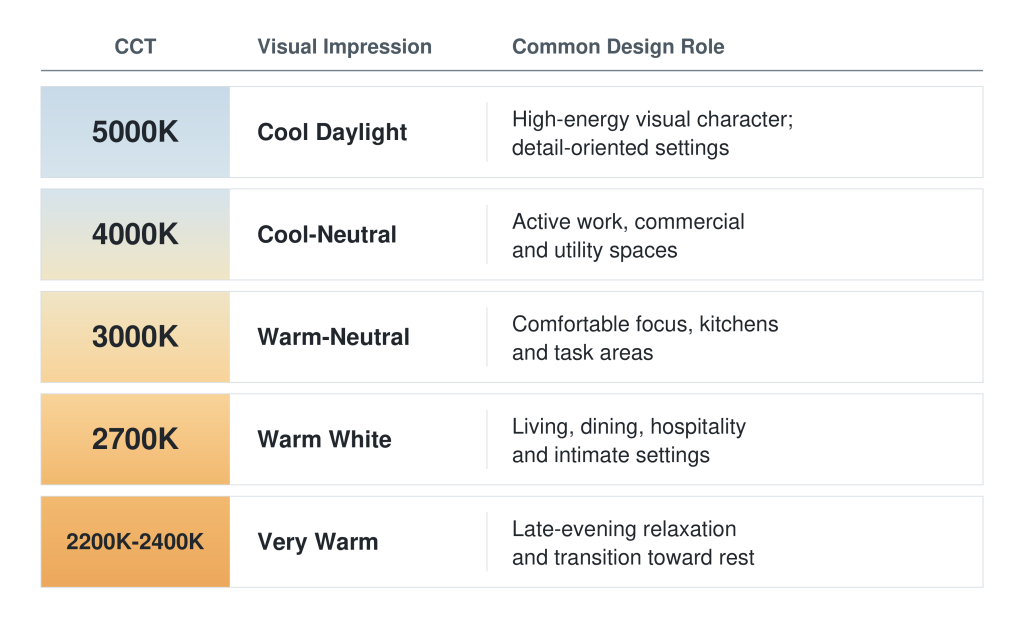
For decades, productivity lighting usually meant that you install light fixtures that would make a space brighter, whiter and more clinical. That brightness underscores ‘concentration’. But concentration does not require a room to feel like an operating theater.
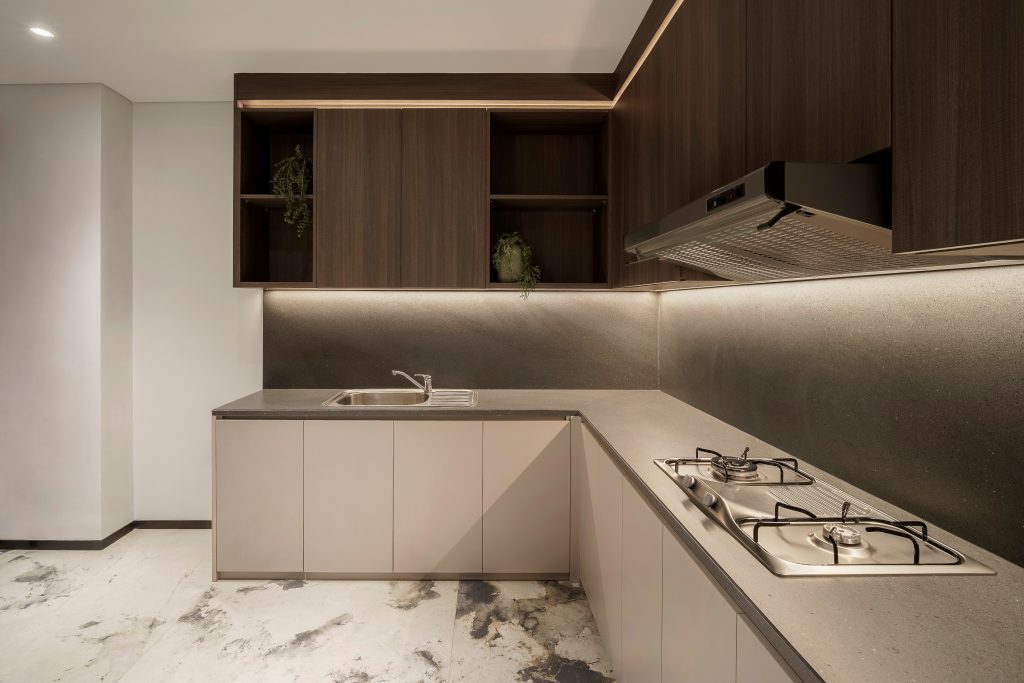
At 3000K, white light retains enough warmth to feel comfortable and residential while remaining crisp enough for reading, food preparation, detailed handwork and office tasks. It is especially effective when the light level is sufficient and glare is controlled. In one small controlled office study, the combination of 3000K and 750 lux produced the lowest measured mental workload among the conditions tested. The researchers also cautioned that the sample was limited and that color temperature and illuminance cannot be separated from the total lighting environment.
That caveat matters. Dim 3000K light will not make anyone productive. But properly delivered 3000K task lighting can create a useful middle ground: alert without feeling harsh, warm without nodding-off.
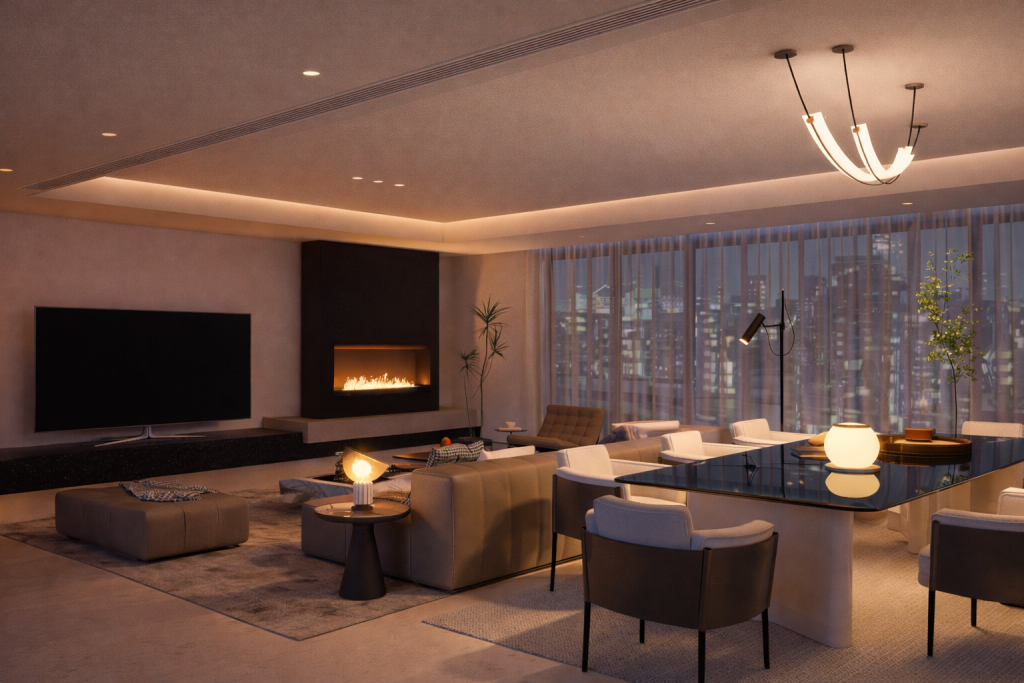
No, 2700K is not an aphrodisiac. It simply knows how to set a table.
Warm white light sits close to the familiar appearance of a dimmed incandescent lamp. It softens contrast, warms skin tones and makes wood, textiles and food feel richer. When it is also dimmed and layered – pendants over a table, light under a shelf, a soft cove washing a ceiling – it reduces the visual sense that every corner is on display.
Research on perceived atmosphere has associated lower-illuminance 2700K environments with coziness, positive feelings and a mellow vibe. Other studies of dim lighting have found that people tend to describe dim rooms as more intimate, relaxing and romantic than brightly illuminated rooms.
This is why 2700K remains a natural choice for restaurants, hotel rooms, living rooms and the part of the kitchen where the work is finished and the evening begins.
By the time white light reaches 2200K, it has moved away from daytime and toward the amber character of firelight, candlelight and the last warm light near sunset. Psychologically, those cues belong to shelter, stillness and the end of activity.
Biologically, evening light is more complicated than a Kelvin label. In general, reducing both light level and short-wavelength stimulation after dark supports the body’s natural rise in melatonin and its preparation for sleep. Very warm light can help, but intensity, spectrum, duration, timing and how much light actually reaches the eye all matter. Two lamps labeled 2200K can have different spectral characteristics and therefore different biological effects.
The best light for actual sleep is still darkness. Think of 2200K-2400K as transition light: low, warm and preferably indirect illumination for the hour before bed, a nighttime trip through the hallway or the final chapter of a book. Its job is not to illuminate the entire world. Its job is to let the world recede.
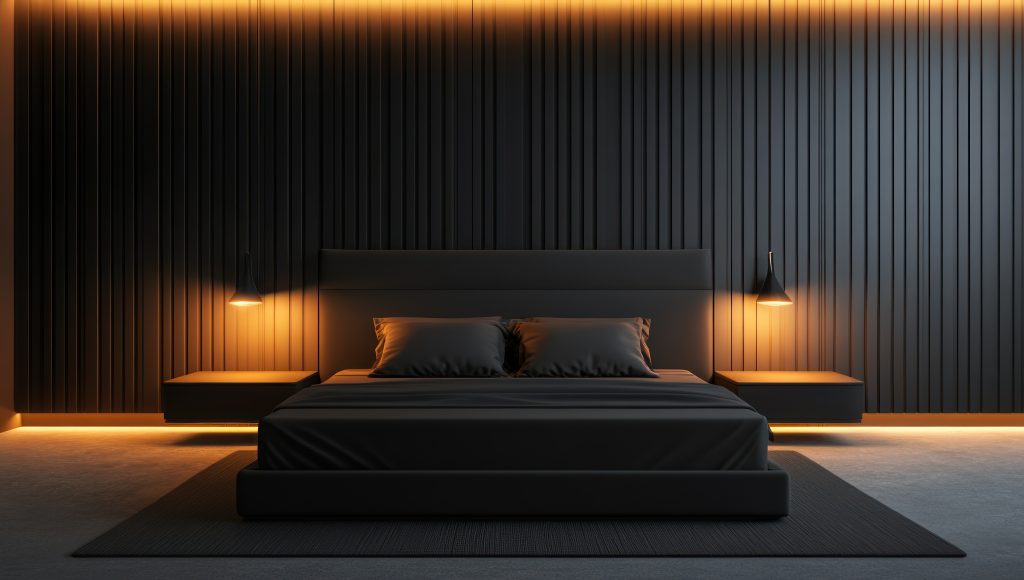
If color temperature is the personality of white light, brightness is its volume. The effect of a warm evening scene can be ruined by turning it up to stadium level. Likewise, a 3000K task light cannot support comfortable work if it is too dim, poorly placed or reflected directly into the eyes.
A complete lighting design considers four variables together:
High color rendering, flicker control, glare management and personal preference belong in that conversation too. Human-centric lighting is not about finding one scientifically perfect setting. It is about giving people light that fits the task, the time and the way the room is actually used.
Tunable White Lighting: One Room, Multiple Color Temperatures
A kitchen may need 3000K light at full task level while breakfast is being prepared, 2700K at a lower level when friends gather around the island, and very warm low-level light when someone enters late at night. A hospitality suite may need clear grooming light in the morning and intimate ambient light in the evening. A home office may become a den after five o’clock.
That is the real promise of tunable white LED lighting. GM Lighting’s ChromaDim 24V Tunable White LED Tape adjusts from 2400K to 5000K and dims to 0.1%, allowing one integrated lighting system to move from brighter task-oriented light to a warm, low evening scene. LTR-S tunable white tape and adjustable-Kelvin undercabinet lighting provide additional ways to build flexibility into the design. GM has more tunable-white and switchable-white fixtures. These amazing luminaires embrace our need for variable color temps, and delivers color temp adjustments.
At 3000K, that moment may be productive. At 2700K, it may become personal. At 2200K, it may finally be time to stop reading this blog and get to bed.
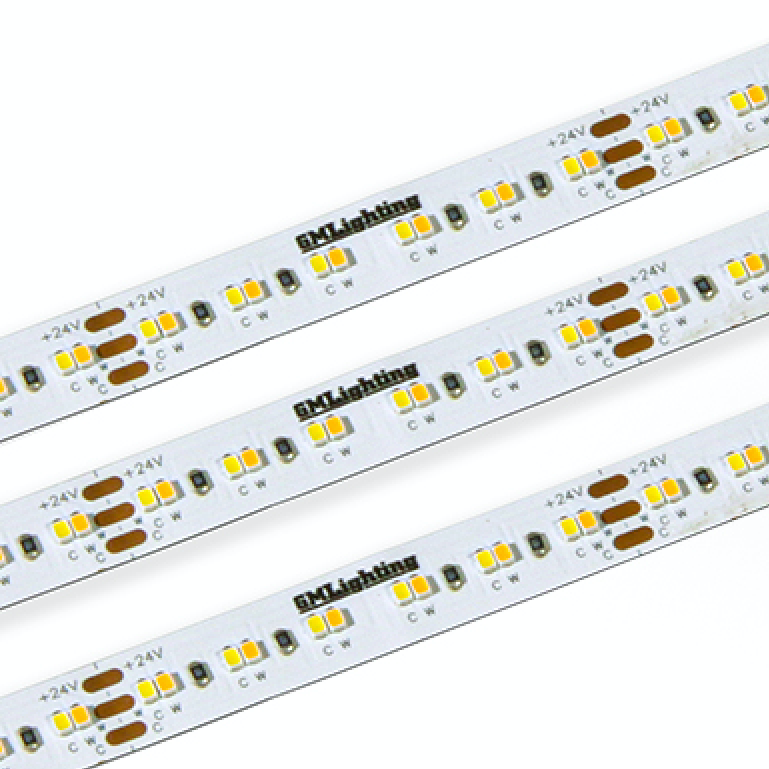
Tunable white enables light to be ‘fine tuned’ over a spectrum of white color temps, therefore allowing subtle to stark ambiance changes to match the mood, the event, or the subject illuminated. Our Tunable White LED Tape can be adjusted from 2400K to 5000K and dimmed down from 100% to 0.1%. Key Features Rated at 1.5W, 3W, 5W per foot...
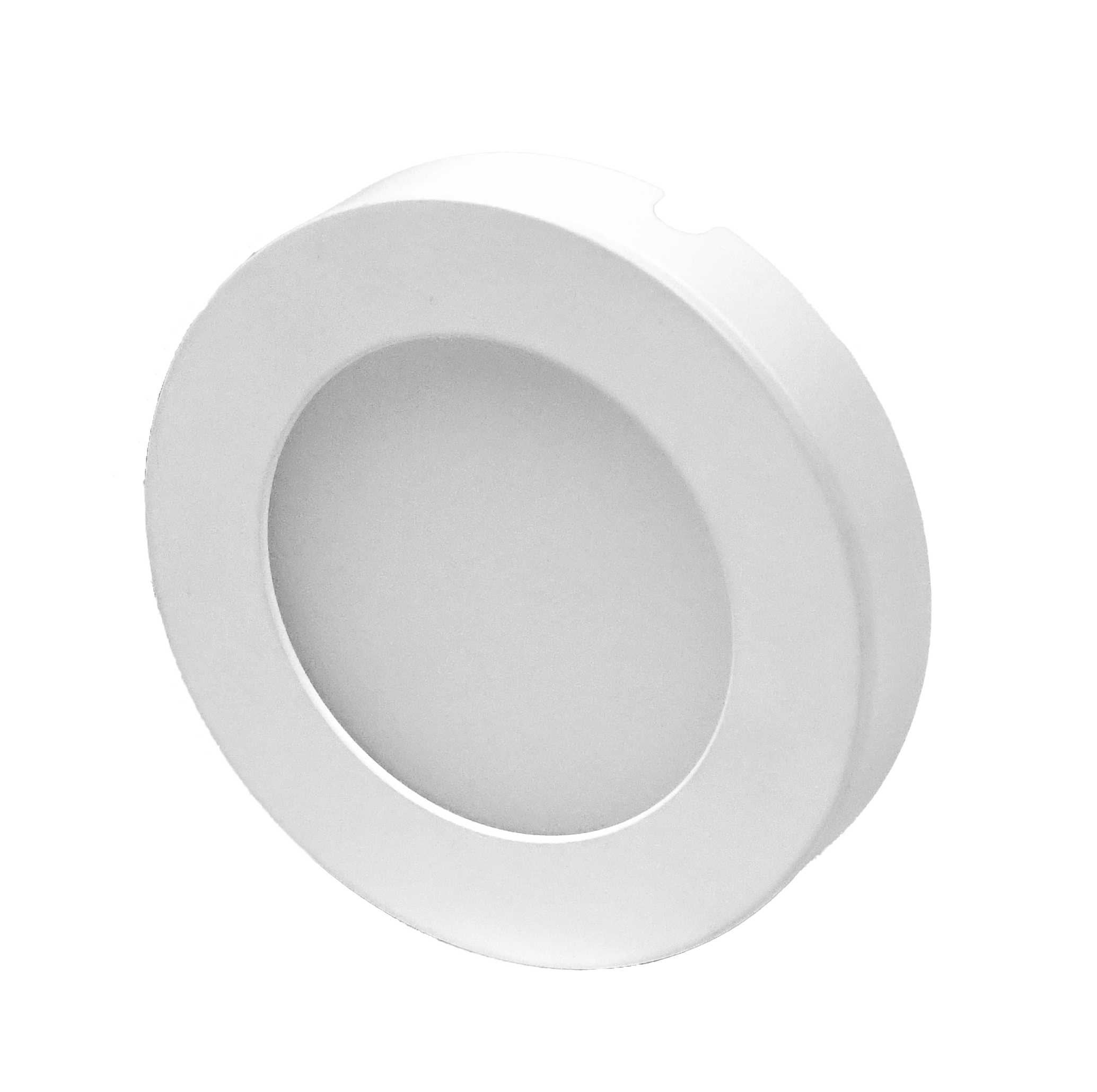
A surface or recess mount 24VDC, 3W High Power Tunable LED puck that is available in white, black, bronze or brushed nickel. All high-grade aluminum for superior heat dissipation. Frosted lens delivers even light distribution. The puck can be tunable and dimmable via ChromaDim Lighting System. 24VDC 3.0W Tunable with ChromaDim Lighting System Adjust color temp. from 2400K to 5000K...
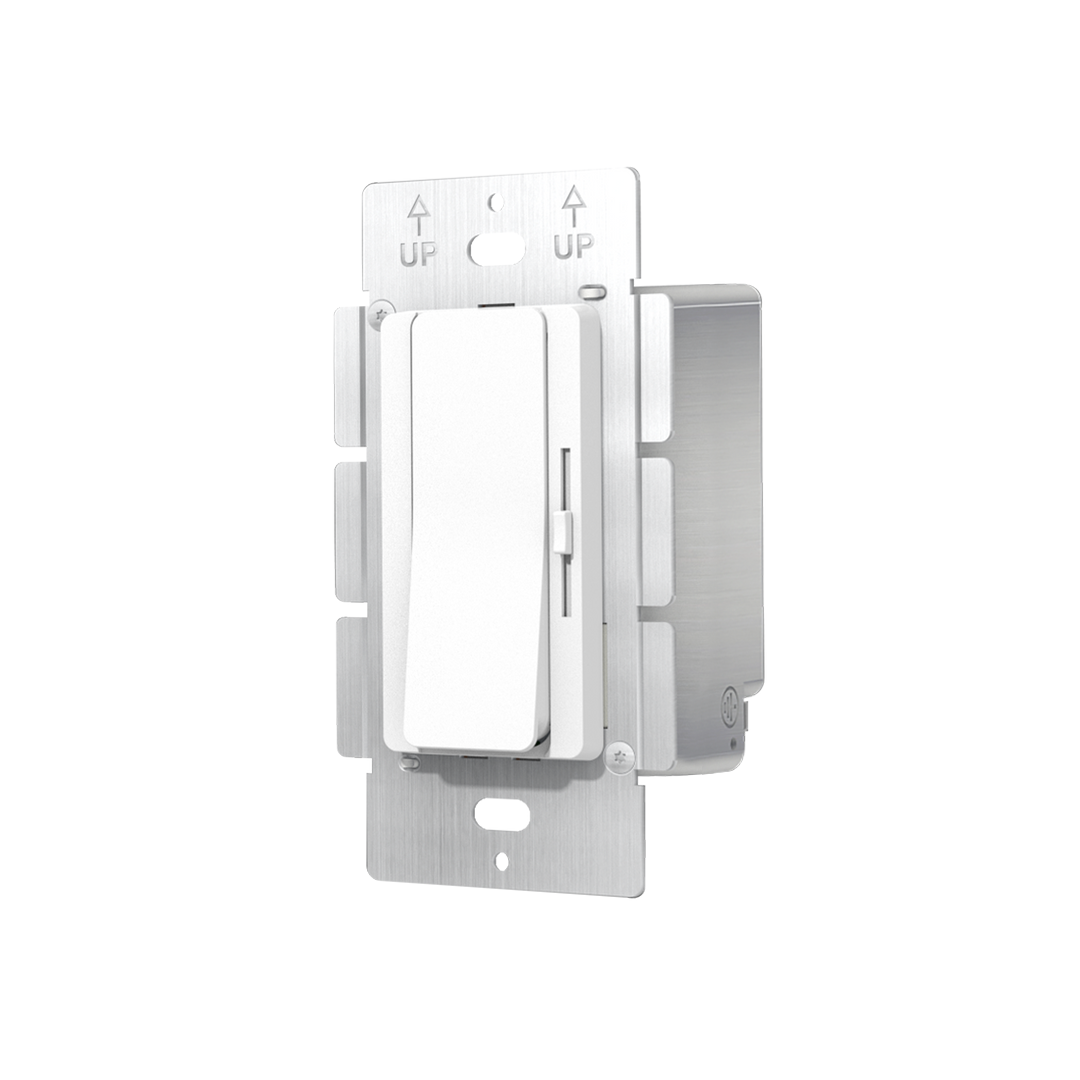
SwitchLD is a driver and dimmer in one reliable wall switch. SwitchLD drives and dims either 12VDC or 24VDC LED tape and lightbars from your 120VAC current. Switch is available with 3 separate switch plate colors. All in one power supply and wall dimmer Single color and color tuning versions Eliminates compatibility issues found in other dimmers Fits single gang & multi-gang electrical boxes 100% -0.3%...
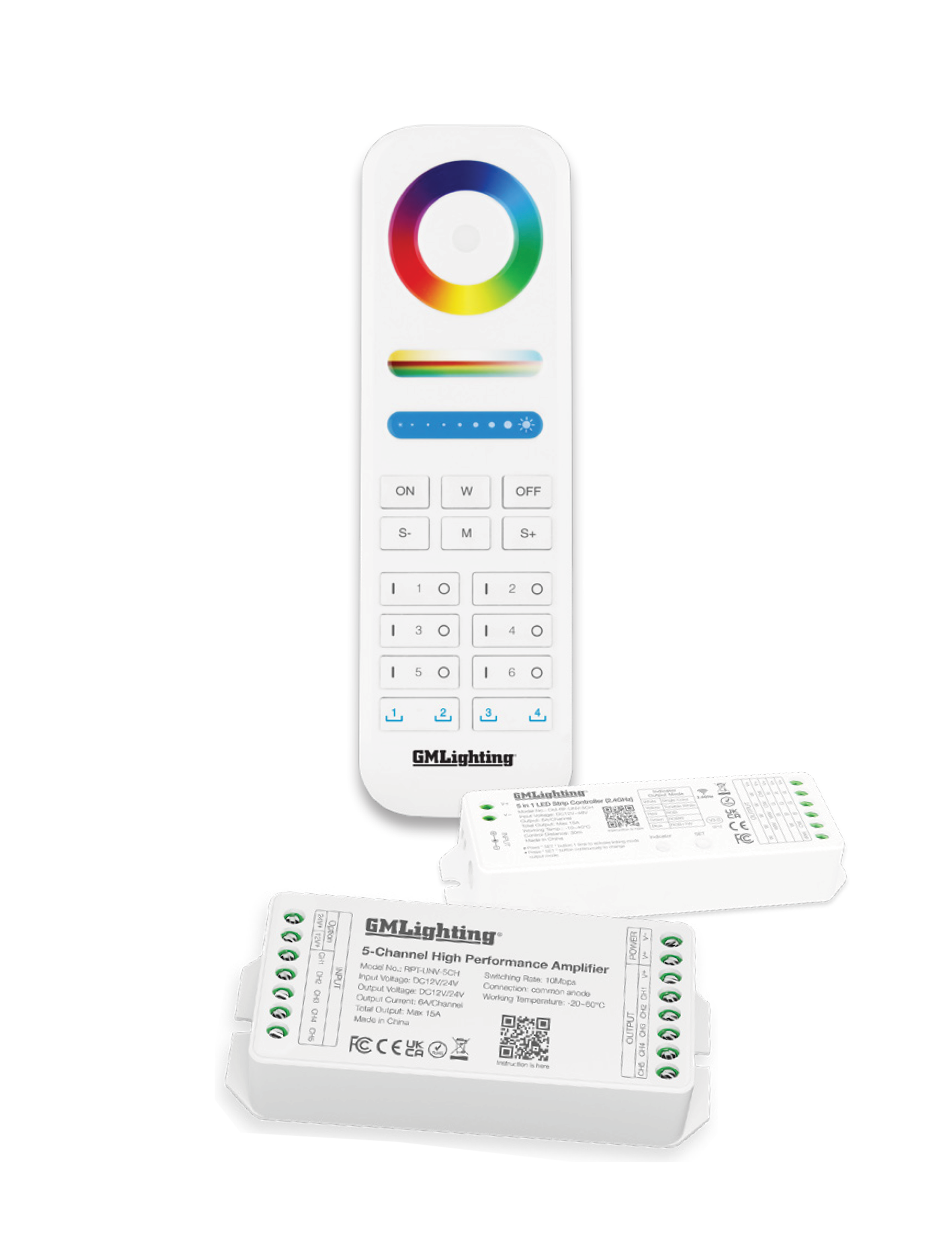
The GM Universal RF Control System is a versatile and reliable solution for a wide range of lighting applications. Designed for seamless control, this system supports 1 to 5 channel LED light sources, making it compatible with single-channel white LEDs, tunable white, and RGB configurations. It also accommodates RGB+White and RGB+CCT tuning, offering flexible lighting options for different environments. Simply...